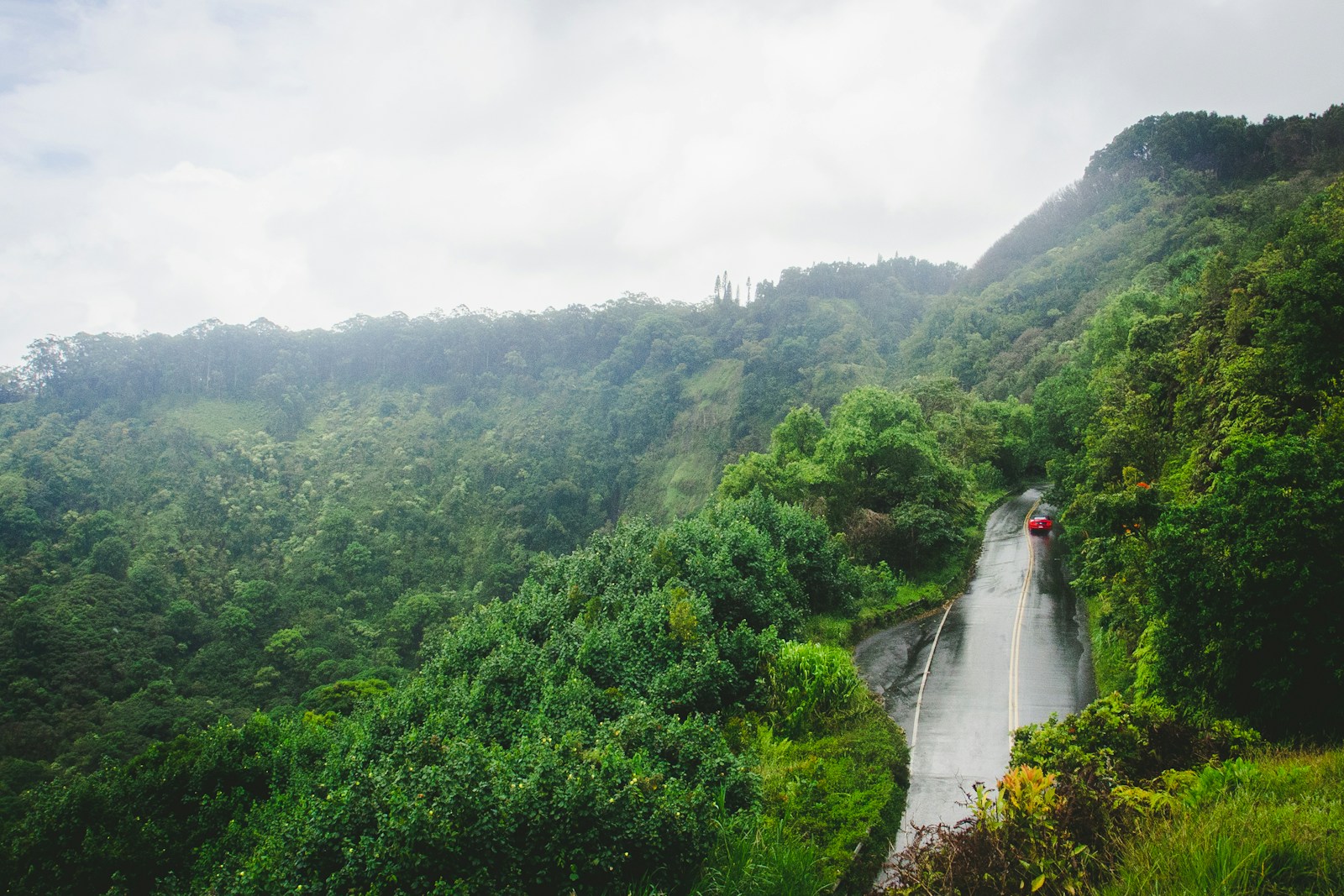

The safest answer is simple: before you drive a Maui rental car on a remote road, a backside route, a road with rough or one-lane sections, or any route your map app treats like a shortcut, ask the rental company first. Maui rental car restrictions are usually about the agreement, not just the vehicle. A Jeep, SUV, or truck does not automatically make a road allowed.
The roads to ask about most often are the backside of Hana along Piilani Highway, Kahekili Highway around northwest Maui, any route past Hana toward Kipahulu or Kaupo, and any unpaved, private, closed, flooded, or “local traffic only” road. Also check official alerts before the drive, because a road that was open yesterday can be affected by rain, landslides, rockfall, construction, or emergency traffic restrictions today.
What “forbidden road” usually means in a rental car
Visitors often search for Maui car rental forbidden roads because they hear a road is beautiful, then hear it is not allowed. The confusing part is that there are several different kinds of “not allowed.”
A rental road restriction can mean:
- Contract restriction: Your rental agreement may exclude certain roads, unpaved sections, remote areas, off-road use, or places where roadside assistance does not apply.
- Official road closure: Maui County, HDOT, police, or emergency officials may close or restrict a road because of flooding, landslides, crashes, fire, construction, or other hazards.
- Local traffic only: Officials may ask visitors to stay out of an area during severe weather or recovery work, even if a road is not fully closed.
- Private or non-public access: Some roads, trails, beach access points, and rural lanes are not public visitor driving routes.
- No parking zones: You may be allowed to drive through an area but not stop where visitors commonly try to park.
That is why the best question is not “Can this car make it?” The better question is “Is this route allowed under my rental agreement, open today, and respectful of the people who live there?”
If you are comparing vehicle classes around these questions, start with the Maui rental car fleet, then call before assuming a certain vehicle makes a road okay.
Roads to ask about before you leave Kahului
Ask about these routes before you commit to the drive, especially if the route is a major reason you are renting the car.
| Route or area | Why it needs a direct question | Safer planning habit |
|---|---|---|
| Standard Road to Hana on Hana Highway | Usually the route visitors mean, but weather, parking, and one-lane bridges still matter | Confirm your agreement, check alerts, and plan an out-and-back route |
| Backside Hana / Piilani Highway beyond Kipahulu and Kaupo | Remote, rougher in places, and commonly treated differently than standard Hana Highway | Ask the rental team before driving past Hana or Kipahulu |
| Kahekili Highway around northwest Maui | Narrow, winding, cliffside, and remote in sections beyond the normal resort drives | Ask before routing between Kapalua, Kahakuloa, and Wailuku |
| Any unpaved or gravel road | Many rental agreements exclude off-road or unpaved use even if a map shows a route | Do not drive it unless the rental company clearly says it is allowed |
| Closed or local-traffic-only roads | Official restrictions can change after storms, crashes, or road damage | Check Maui County and HDOT before leaving cell service |
| Beach, trail, or scenic pullout access roads | Some are private, narrow, muddy, or not suitable for rental vehicles | Park only in legal public spaces and skip questionable access roads |
This is also where vehicle choice can mislead people. A Maui Jeep rental can be a fun scenic choice, and a Maui SUV rental can make longer drives more comfortable, but neither one overrides a rental policy, a closure, or a no-parking sign.
Standard Road to Hana is not the same as backside Hana
“Road to Hana” can mean two different things in a rental conversation. The standard visitor route is the north-side drive from Kahului or Paia along Hana Highway toward Hana, then back the same way. That is the route most day trips, reservations, and planning guides are built around.
The backside route is different. Visitors usually mean continuing past Hana and Kipahulu toward Kaupo and around the south side of Haleakala on Piilani Highway. That section is more remote, can have rougher or narrower stretches, and may be affected by weather or emergency restrictions. It also has less visitor infrastructure if something goes wrong.
Do not let a navigation app quietly turn a normal Hana day into a full loop. If your map suggests continuing around the backside instead of turning around, stop and check:
- Does your rental agreement allow that specific route?
- Did the rental team say “yes” to Piilani Highway beyond Kipahulu and Kaupo?
- Are there any current closures, local-traffic-only advisories, or weather issues?
- Do you have daylight, fuel, water, and enough driver energy left?
- Are you willing to turn around if the road or conditions feel wrong?
For most visitors, the conservative rental-car plan is a standard Road to Hana out-and-back with a few priority stops and legal parking. The Road to Hana rental car guide goes deeper on vehicle fit, timing, fuel, and parking for that day.
Kahekili Highway is a separate West Maui question
Kahekili Highway creates a different kind of confusion. Visitors staying in Kaanapali, Napili, or Kapalua may see a loop around northwest Maui and assume it is a scenic extension of normal West Maui driving. Parts of West Maui driving are normal visitor routes. The narrower Kahekili sections around Kahakuloa and toward Waihee are a separate question.
Ask before driving that loop because the road can be narrow, winding, and exposed, with limited room to recover from a mistake. A driver may also run into local traffic, delivery vehicles, residents, emergency vehicles, or construction work. If two vehicles meet in a tight one-lane section, the problem is not horsepower. It is judgment, space, and the ability to back up safely.
If you are staying in West Maui, you do not need Kahekili Highway to enjoy the trip. Most resort, beach, restaurant, grocery, and activity drives happen on the main West Maui routes. For a normal Kaanapali or Kapalua stay, compare your luggage and passenger needs first, then choose a vehicle that fits those everyday drives.
Official road alerts to check before a long drive
Rental permission and road status are two separate checks. You need both.
Before a Road to Hana, Haleakala, Upcountry, West Maui, or remote-route day, use official sources:
- Check HDOT Maui lane closures for state highway work, including updates that can affect Hana Highway, Piilani Highway, Kahekili Highway, and other major Maui roads.
- Check Maui County road closure notifications for unplanned road closures and emergency notices.
- Check Haleakala National Park alerts and conditions before driving to the Summit District or Kipahulu, because park access, reservations, weather, and facilities can change.
- Watch weather and flood conditions before driving into remote or low-service areas.
Maui County notes that its road closure notifications are for unplanned major roadway closures, while construction slowdowns may not always be listed there. That is why HDOT and Maui County should both be part of your check, not one or the other.
Parking restrictions can matter as much as road restrictions
Some Maui rental car problems start after the road itself was allowed. The driver reaches a famous stop, finds no legal space, and decides to park in a way that blocks traffic, a driveway, a bridge, a shoulder, or a narrow lane.
That is especially risky on Hana Highway. HDOT has warned drivers about no-parking citations and a state highway surcharge on posted Hana Highway zones because illegal parking created safety problems along the only road to Hana.
Use this rule: if there is no legal parking space, keep moving. Do not stop because another visitor stopped. Do not assume a shoulder is fair game. Do not make local residents, emergency responders, or other drivers solve a parking decision that was avoidable.
This is also a reason to avoid oversized vehicles unless your group truly needs the room. A smaller car, compact SUV, or midsize SUV is often easier to fit fully into legal spaces than a large van or oversized SUV. Larger families may still need Maui minivan rentals, but the tradeoff is accepting that some tight stops are worth skipping.
What to ask Aloha Rent A Car before you book
Aloha Rent A Car is based at 181 Dairy Rd in Kahului, near Kahului Airport, and has served Maui since 1975. If your trip includes a road you are unsure about, ask before you reserve or before you leave the lot. It is easier to change the plan in Kahului than from a remote roadside with weak cell service.
Ask direct questions:
- Is the standard Road to Hana allowed under this rental agreement?
- Is driving past Hana toward Kipahulu allowed?
- Is the backside route through Kaupo and Piilani Highway allowed?
- Is Kahekili Highway around northwest Maui allowed?
- Are any unpaved or gravel roads allowed?
- Does roadside assistance apply if I ignore a road restriction?
- Does insurance or damage responsibility change if I drive somewhere prohibited?
- Is there a better vehicle class for the route I am actually planning?
Also review the Aloha Rent A Car rental policies for payment, insurance, age, damage responsibility, and return details. Road questions should be handled directly with the team because route conditions and rental restrictions can be more specific than a short policy page.
If your map app suggests a shortcut, pause
Map apps are useful for normal Maui drives, but they are not rental contracts and they do not always understand visitor consequences. A route can be technically mapped and still be a poor choice because it is remote, rough, restricted, private, closed, or unsuitable for your group.
Pause when the app suggests:
- A loop instead of returning the same way from Hana.
- A route through Kaupo, Kipahulu, or the backside of Haleakala.
- A northwest Maui loop through Kahakuloa instead of staying on familiar West Maui routes.
- A road that turns from pavement to gravel.
- A shortcut through a residential or agricultural area.
- A route with no nearby services, no cell signal, and no easy turnaround.
When in doubt, choose the boring route. On Maui, boring usually means paved public roads, legal parking, daylight, enough fuel, and a route your rental agreement clearly allows.
A practical pre-drive checklist
Use this before any drive that feels more remote than a resort, airport, beach, or town errand.
- Read the rental agreement for restricted roads, unpaved roads, off-road use, towing, insurance, and roadside assistance.
- Ask the rental team about the exact route names, not just “Hana” or “the loop.”
- Check HDOT, Maui County, park alerts, and weather before leaving.
- Start with enough fuel from Kahului, Paia, Kihei, Lahaina side, or another reliable town stop.
- Download maps, but do not treat them as permission.
- Carry water, snacks, rain layers, and motion-sickness supplies.
- Turn around before daylight, weather, driver fatigue, or road conditions become the problem.
- Skip stops where parking is not legal and obvious.
If the drive is mainly about testing whether the road is allowed, it may not be the right rental-car day. Choose a different route, book a tour, or ask the local team for a safer plan.
The clean answer before you drive
For Maui rental car road restrictions, ask before driving the backside of Hana, Piilani Highway beyond Kipahulu and Kaupo, Kahekili Highway around northwest Maui, unpaved roads, closed roads, local-traffic-only areas, and any map-app shortcut that looks remote or rough. The rental agreement controls what is allowed, and official road alerts control what is open today.
To choose a vehicle around real Maui roads, check availability for your dates. If your itinerary includes Hana, Kipahulu, Kaupo, Kahekili Highway, Haleakala, or any route you are unsure about, contact the Aloha Rent A Car team before you book or before you drive.