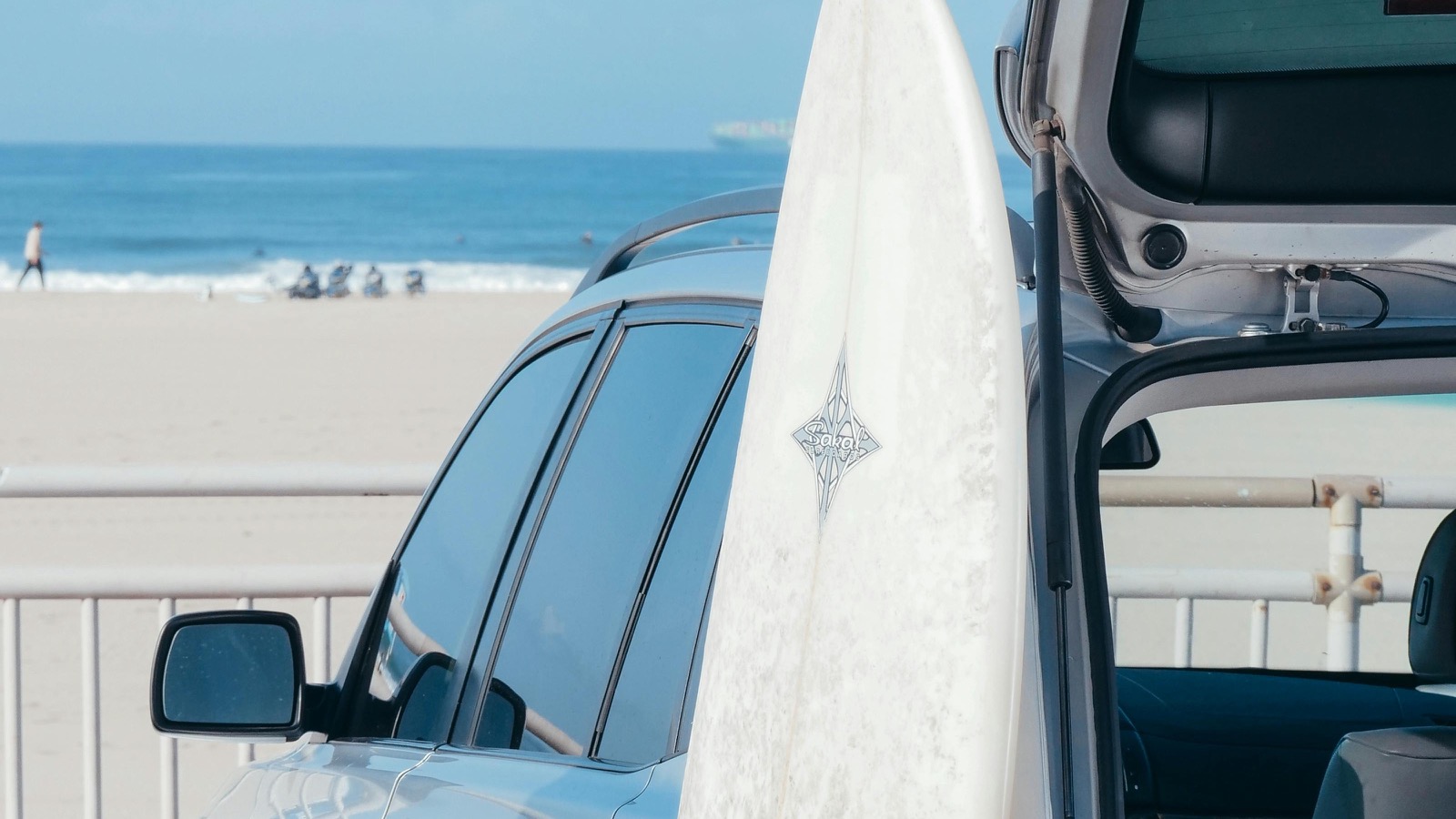
The best Maui rental car for surfboards or windsurf gear is the smallest vehicle that safely fits your longest piece of equipment, every passenger, and the full airport-day luggage load. For one or two shortboards, a confirmed rack-equipped SUV or minivan may work. Longboards, windsurf sails, booms, masts, hydrofoil parts, and a larger quiver often point to a gear-focused van or a truck setup that the rental company has approved. Do not reserve from the vehicle photo alone: measure the gear, ask what racks or interior supports are actually included, and confirm how everything must be secured.
Aloha Rent A Car lists a five-seat windsurfing van class with inside surf racks, but availability and class features vary by date. Start with the Maui van rental options, then use the checks below before choosing a specific class.
Measure the gear before comparing vehicles
Passenger count is only the first dimension. A board or mast can be too long for a vehicle with plenty of cargo volume, while a bulky board bag can stop a rear hatch from closing.
Measure the packed equipment you will actually bring:
- The longest board, mast section, boom, or foil bag.
- The widest and thickest board bag at its largest point.
- The number of boards stacked together, including padding.
- Sails, wings, pumps, harnesses, wetsuits, fins, and padded hydrofoil parts.
- Any rack pads, straps, tie-downs, locks, or protective bags you expect to use.
Measure the packed version, not the bare board. A padded travel bag, foil case, or mast bundle can add the inches that change the answer. “Two surfboards” is not enough information because two shortboards and two longboards need different loading plans. The Aloha Rent A Car team can identify classes worth considering for your measurements.
Run the airport load and the water-day load separately
A setup can work perfectly after the suitcases are at the hotel and fail completely after landing at Kahului Airport. Test both loads before booking.
| Trip setup | Airport-day question | Water-day question | Likely starting point |
|---|---|---|---|
| 1–2 travelers with shortboards | Do boards, travel bags, and suitcases fit without blocking seats or visibility? | Can wet gear stay separate from dry items? | Rack-equipped SUV or minivan, if the exact rack is confirmed |
| 2–3 travelers with a longboard | Does the packed board length fit the confirmed carrying setup? | Can the board be secured without projecting unsafely? | Gear van or another specifically approved setup |
| 2–4 windsurfers or foil riders | Will sails, masts, booms, boards, foil cases, and luggage fit together? | Can hard parts be padded so they do not shift? | Windsurfing van class or more than one vehicle |
| 5 travelers plus boards and full luggage | Does the gear consume the cargo space needed for bags? | Will every person still have a normal belted seat? | Call before booking; seat count alone does not settle it |
Never plan to solve a space problem by placing a board across passengers, blocking the driver’s view, interfering with controls, or leaving a hatch partly open. If the airport load only works after someone holds gear on a lap, it does not work.
Compare three carrying methods, not just three vehicle classes
The real choice is where the equipment rides and how it stays secure.
| Carrying method | Main advantage | Main limitation | Confirm before reserving |
|---|---|---|---|
| Inside-rack gear van | Keeps long gear enclosed and separates it from exterior wind | Passenger and luggage space still have limits | Usable inside length, rack layout, seat count, A/C, and current availability |
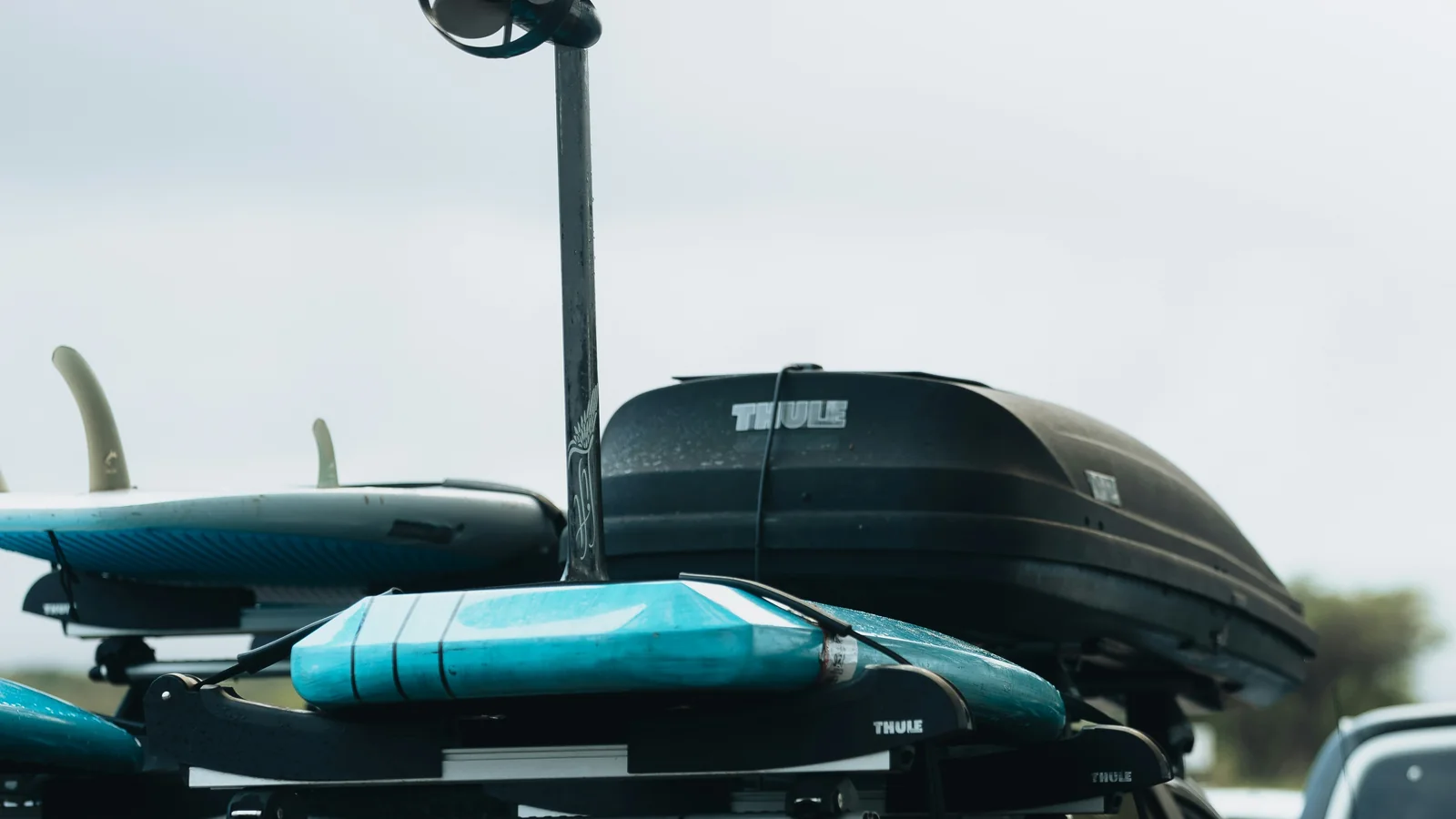
| Confirmed roof-rack vehicle | Preserves more enclosed space for people and bags | Requires a compatible rack, correct padding, and secure tie-downs | Exact rack equipment, permitted use, load limits, and who supplies straps |
| Pickup bed or approved truck rack | Useful for long or bulky equipment | Gear is exposed to weather and view, and a bed is not automatically long enough | Bed or rack dimensions, tie-down points, cover, permitted setup, and secure-load plan |
A category does not guarantee a carrying method. An SUV may lack watersports racks, a pickup may have no board rack or cover, and a van may lack the interior length your mast bag needs. Confirm the class offered on your dates.
When the inside-rack windsurfing van is the cleanest fit
Aloha’s current fleet content lists an older windsurfing van class with five seats and inside surf racks. It is a useful starting point when boards, sails, or masts matter more than maximum passenger capacity.
Treat those details as class information to verify, not as a promise for every reservation. Confirm:
- The current vehicle, rack configuration, and usable interior length.
- How many seats remain usable after gear is loaded.
- Whether the layout works for boards, masts, and foil bags.
- Current availability for the complete rental period.
The old windsurfing van class listing specifically says A/C is not guaranteed. If air conditioning is essential, say so while comparing classes rather than assuming every full-size van has the same equipment.
A roof rack must be confirmed, not inferred
Some older SUV and minivan class listings may include watersports racks. That can be a practical middle ground for travelers who want an enclosed cabin for luggage but do not need an interior-rack van.
The words “SUV” or “minivan” do not mean a rack is included. Example models, model years, crossbars, rack styles, and accessories can vary. Ask whether the offered class has a rack suitable for your gear, whether pads or straps are supplied, and what the rental agreement allows you to attach.
Do not improvise a system that contacts painted panels, prevents doors from closing, or depends on an unfamiliar knot. Check approved straps after the load settles. If the setup feels unstable, stop safely and correct it.
A truck bed solves volume, not every gear problem
A pickup can help with bulky board bags or equipment cases, but the bed may be shorter than a longboard or mast bag and gear remains exposed to weather and view.
Never assume that a pickup includes a board rack, locking bed cover, straps, or suitable anchor points. Confirm the exact setup and keep every load within the rental agreement. Hawaii law requires vehicle loads to be contained or securely fastened so they cannot drop, blow, spill, or shift. The Hawaii Department of Transportation’s secure-your-load guidance recommends tying down cargo, fastening large objects directly to the vehicle, and double-checking that nothing can slide or fall.
That rule applies whether the equipment is in a truck bed or on an approved rack. A board leash is not a cargo tie-down, and a towel is not rack padding. Use the permitted equipment designed for the job.
Give wet gear a separate plan
Surf and windsurf equipment changes after the session. Board bags collect sand, wetsuits drip, and saltwater moves from equipment to whatever it touches. The vehicle should still be returned in the same condition in which it was received.
Build a simple wet-gear routine:
- Shake off loose sand where doing so is appropriate and does not affect other beach users.
- Keep wet suits, booties, harnesses, and towels in a ventilated waterproof bin or bag.
- Pad fins, foil masts, and other hard edges before they go back into the vehicle.
- Keep saltwater away from seats, electronics, and luggage.
- Let equipment dry at your lodging where permitted.
Do not drape wet gear over mirrors, doors, or a roadside setup where it can obstruct traffic or other visitors. A good loading system should be repeatable in a normal parking space without spreading equipment across the lot.
Keep boards secure without advertising everything else
Enclosed gear can reduce visibility from outside, but it is not a substitute for a theft plan. Hawaii’s official visitor safety guidance recommends keeping valuables in a hotel room or safe and, when something must be left in a trunk, placing it there before arriving at the destination. Review the current Hawaii visitor safety tips before the trip.
For a water day, carry only what you need. Keep passports, spare cards, extra electronics, and most luggage at the lodging. Do not leave phones, wallets, camera bags, or loose gear visible in the cabin. An open truck bed and an exterior rack make equipment easier to see, so plan stops around what will remain unattended.
North Shore days reward a compact, repeatable setup
Paia and Maui’s North Shore combine town parking, beach access, wind, pedestrians, and repeated loading. The best vehicle is one you can park legally, unload without blocking traffic, and secure again efficiently.
If you are staying around Paia, Makawao, or Upcountry, the Maui beach parking guide helps with legal parking, visible valuables, and choosing an appropriate space. For a gear-focused day, add these checks:
- Follow posted parking signs and stay out of travel lanes and private access points.
- Do not make sudden roadside stops because you can see wind or waves from the car.
- Check conditions and choose the water activity separately from the vehicle decision.
- Keep rental vehicles on legal rental routes; a truck, SUV, or Jeep does not make off-road use acceptable.
The car gets you and the equipment to the coast. It does not decide whether ocean conditions are appropriate for your ability.
Make pickup a fit check, not the first experiment
Bring the measurements and loading plan to pickup. Before leaving Kahului, identify the approved rack or interior support, confirm the tie-down method, and make sure passengers, airport bags, and gear can ride safely. If a class feature differs from what you expected, ask the team before attaching anything.
On return day, remove personal straps, pads, locks, wax, and small gear; contain wet equipment; and allow time to unload. Follow the return instructions attached to the reservation.
Compare the full Maui rental car fleet only after you know the packed dimensions. Then check availability for your dates. For a windsurfing van, a rack-equipped SUV or minivan, or any truck-based plan, contact the Kahului team with the number of passengers, bags, boards, and the longest packed item so the reservation starts with a workable gear plan.